How my travel opinions have changed since I first began solo traveling:
To hear this in audio format, listen to the podcast episode here:
Table of Contents
- How my travel opinions have changed since I first began solo traveling:
- 1. Solo travel doesn’t (have to) mean you’re alone the whole time
- 2. Hostels are not the greatest thing in the world
- 3. Follow an itinerary that makes sense to you, not what people on the internet tell you
- 4. Differentiating yourself as a “traveler” rather than a “tourist” is elitist
- 5. Safety is subjective
- 6. “Living like a local” is unrealistic
- 7. Modern-day colonialism is a thing
- 8. You are not as open-minded as you think you are
- 9. Travel doesn’t change you; travel can change you
- 10. Long-term traveling is not what you think it is
If you know me or have even briefly met me, you know I love to travel.
I’ve had a deep desire to explore the world for as long as I can remember (seriously).
As soon as my parents allowed me to, I was off chasing my wanderlust to all places that excited me.
I began solo traveling when I was 19 years old.
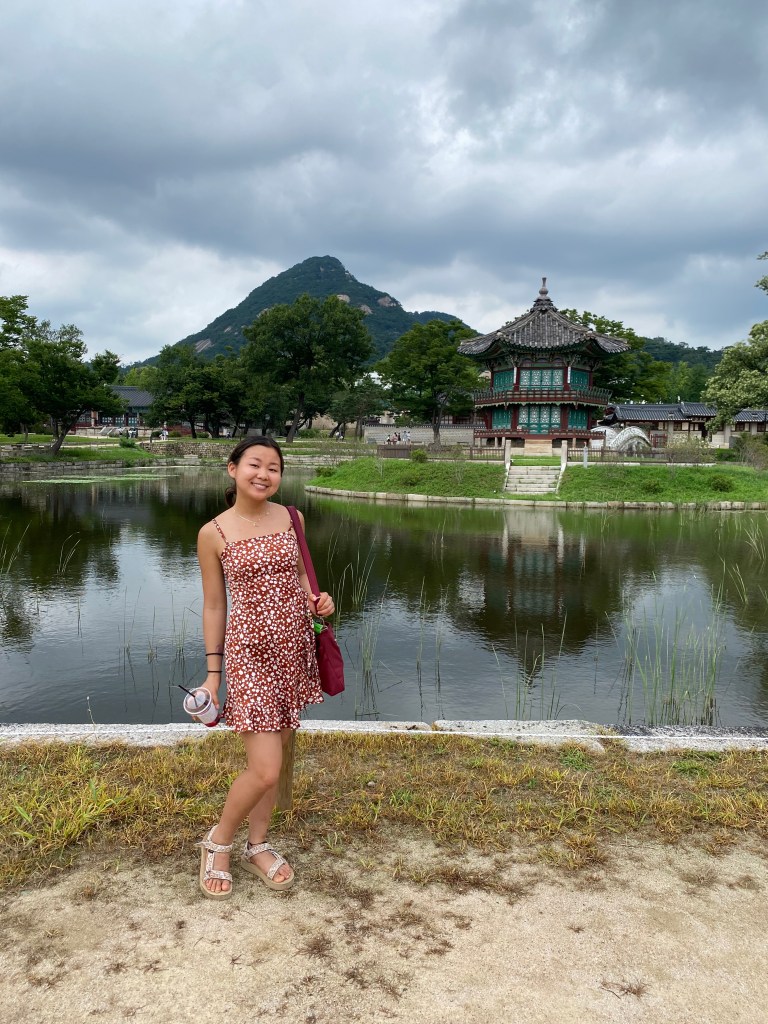
Since then, I’m beyond grateful to have traveled to many different parts of the world — from South Korea to Spain.
Though my love for traveling has not changed, my perspectives about travel definitely have.
I was inspired to reflect upon these after re-listening to my old podcast episodes on “gottacaseofwanderlust”.
Therefore, my intention with this article is to show (mostly myself) how much one can grow throughout the years, even if it may not be obvious, and to incite curiosity and further reflection on various discussions about travel.
I am (as we all are) still learning as a human being, so in a few more years, I’ll (hopefully) have even more nuanced opinions.
But for now, here’s how my thoughts about travel as a 22-year-old have changed since I was 19 (that you may or may not agree with):
1. Solo travel doesn’t (have to) mean you’re alone the whole time
I can be stubbornly independent. When I first began solo traveling, I was determined to do things on my own, perhaps to prove that I could.
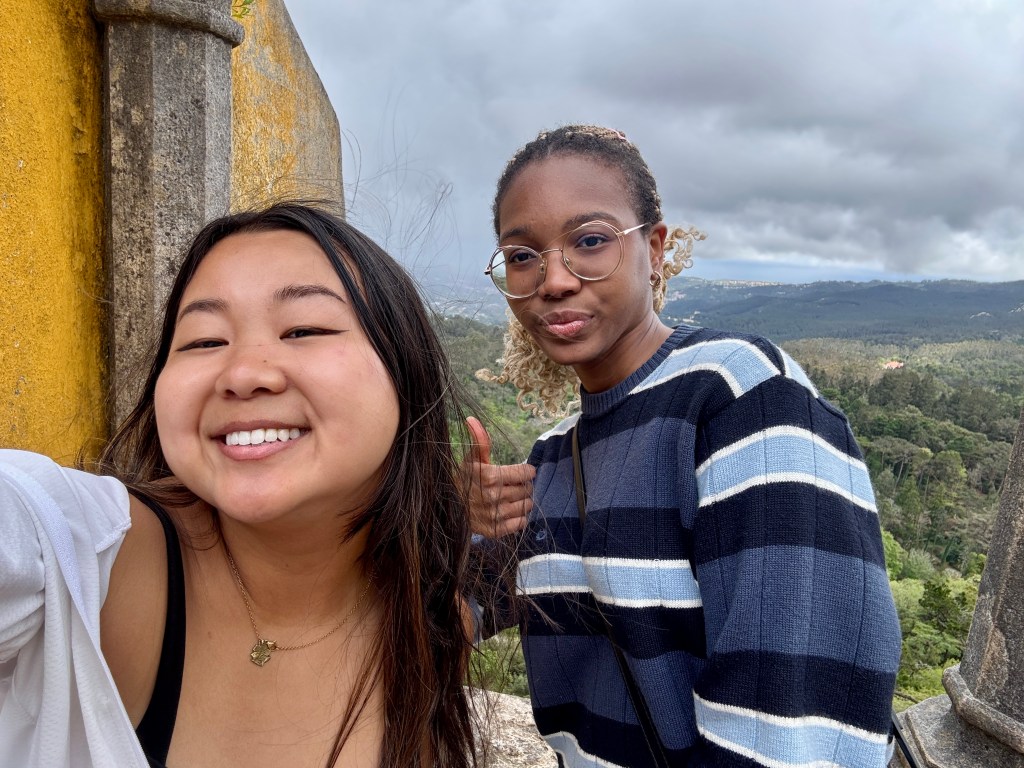
But I inevitably started to feel lonely, I learned that making the effort to meet people on tours or outings is often way more fun than doing things alone.
Now, I try to balance exploring on my own with exploring with others.
It’s much easier than you think to meet people, even if, and arguably because, you are solo traveling.
Participating in hostel outings or the common areas (utilize the Hostelworld “chat” feature!), joining free walking tours, or utilizing travel social apps such as TripBFF or NomadHer, all present great opportunities to meet other travelers.
For a solo female travel guide, check out my article here.
I’ve also written a guide about staying in hostels for the first time here.
2. Hostels are not the greatest thing in the world
In my early podcasts, I claimed that hostels were the place to stay when traveling.
I claimed to be a “hostel superfan.”
While I still generally love hostels, I see their flaws now (besides the shared bathrooms).
Sometimes, hostels can be just as problematic as hotels, environmentally and/or ethically speaking.
For example, international hostel chains are typically not locally owned, which matters because the money does not entirely stay in the local economy, and may displace local people who could be using the building as housing.
So while hostels are great for their affordability and opportunities to meet people, they may not be the most sustainable/ethical choice and shouldn’t be glorified as the best accommodation option.
3. Follow an itinerary that makes sense to you, not what people on the internet tell you
Aren’t we all guilty of visiting places or sites just because they’re popular?
If you went to Paris and didn’t climb up the Eiffel Tower, were you even in Paris?
I’ve been guilty and can still be guilty of feeling pressured to do certain things just because “it’s the thing to do” in a particular destination.
But why feel the need to do something that doesn’t interest you?
For example, I’m not really a museum person.
Sorry. I’m just not that sophisticated.
But often, one of the “Top 5 Things to Do” in a city is a museum.
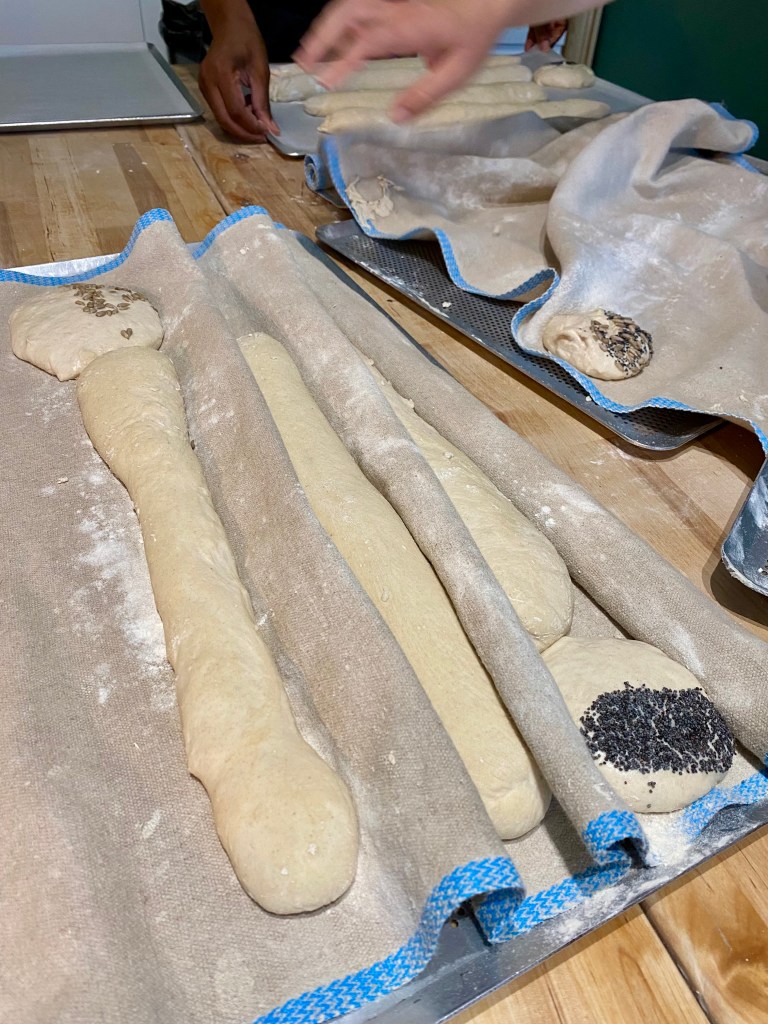
And because I’ve gotten to know myself better when traveling, I know I’d be much happier doing a bakery tour or going on a hike, than visiting some world-renowned museum.
You and your preferences should dictate your travel experiences — not what others think you “should” do.
4. Differentiating yourself as a “traveler” rather than a “tourist” is elitist
It’s been somewhat of a trendy thing recently to refer to your vacationing style as being a “traveler” and not a “tourist.”
In previous podcast episodes, I’ve even jumped onto this idea that being a “traveler” is better because it essentially means that you are exploring a destination more “authentically” (this is a problematic concept in itself), rather than exploring as a “tourist” where everything is laid out for you.
But come on. If we are visiting somewhere temporarily, we are tourists.
The classification between traveling styles is merely a way for those with more travel experience to shame others with less travel experience.
At the end of the day, we are all tourists — but that doesn’t have to be a bad thing.
We can still be tourists who get off the tourist path and explore areas with more locals; we can still be tourists who engage respectfully with locals and learn more about their culture; we can still be tourists who support local businesses and consume mindfully.
Though we are all tourists, some practices make us more or less problematic to the communities we’re visiting — the categorization is unnecessary.
5. Safety is subjective
Get used to me using the term “subjective” (which means it varies based on the individual) because I’m a big proponent of looking at the grey area, rather than the black-and-white, of an idea.
I’m guilty of asking the popular, “Is ___ safe?” question.
But when anything can happen anywhere at any time, how can we judge a destination’s safety based on one individual’s experience?
Firstly, a person’s appearance (gender, skin color, language spoken, etc) affects how much of a target you are of ill-intentioned actions (such as pickpocketing, catcalling, or assault).
Secondly, everyone’s tolerance for discomfort is different.
Places that may feel “unsafe” to you may be considered “safe” to someone else.
Thirdly, many destinations/cities may be generally “safe” but have areas that are statistically more “unsafe”.
Does that mean you shouldn’t travel to that destination?
Chicago, where I consider myself a “local,” is often cited as a more “dangerous” city.
While it is true that crime rates are higher, they occur mostly in certain areas of the city that tourists have little reason to visit anyway.
To label the entire city of Chicago as “unsafe” just wouldn’t be objectively true.
Thirdly, often destinations are regarded as “unsafe” purely because of skewed representation in the media.
Countries in Latin America, the Middle East, and Africa are all regions that have a disproportionate amount of negative media representation, and therefore, are seen as more “dangerous” to travel to.
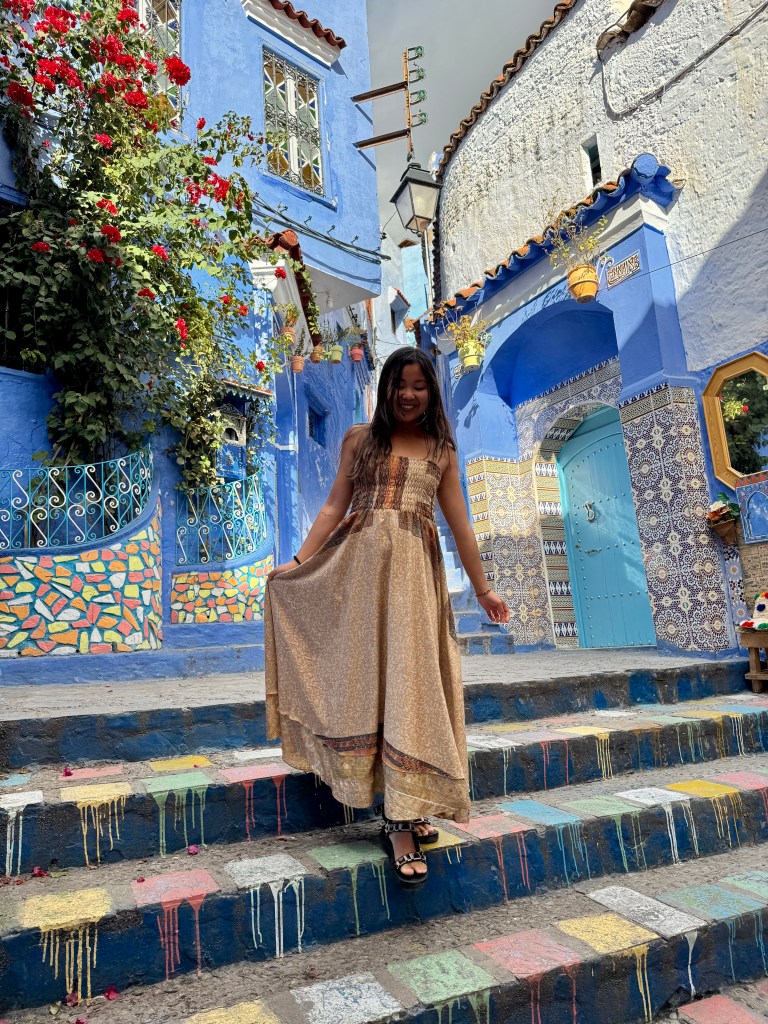
Morocco, a predominantly Muslim country located in North Africa, is not typically promoted as “safe,” especially for solo female travelers.
While this did not prevent me from traveling there alone, I was definitely more cautious at first than I would have been in any European country.
Yet after my first day, I felt safer in Morocco than anywhere in the United States.

I met more kind and generous people in Morocco than anywhere else I’ve traveled so far, and the community-oriented culture is why I’ve since solo-traveled to several cities in Morocco.
I realized that we are told to fear certain cultures just because of discriminatory societal perceptions against certain races, religions, or cultures, perpetuated significantly by the media (news outlets, television, Hollywood, etc).
So take what you hear about a destination with a grain of salt.
Every individual experiences a place differently (also best not to place much weight on a person’s opinion of a place that’s never even been there themself), which is why “safe” is subjective.
Deciding whether or not to visit a destination should be based on more than just the stereotypes you hear.
Check out my Morocco resources here:
6. “Living like a local” is unrealistic
What does “living like a local” even mean?
Like, really, is there just one definition of who a local is or what they do?
Think about your day-to-day life at home: would any of it be alluring if you were a tourist?
Probably not.
While I think the initiative to “live like a local” or visit “local” places is good-intentioned, it’s unrealistic when there are a myriad of ways to define “living like a local” and what constitutes “local” places or activities.
Not to mention, some things are touristy for a reason – they’re simply more interesting than visiting a “local” laundromat.
Note: this doesn’t apply to the intention to support local businesses.
Supporting locally owned businesses (guest houses, restaurants, artisan shops, etc) should absolutely be prioritized when traveling to ensure that your money stays within and supports the destination you’re visiting!
7. Modern-day colonialism is a thing
Okay, this one is super complex, I know.
But it is important to recognize, regardless of potential controversies.
What is colonialism?
Colonialism is defined as taking control of another territory, resources, and/or people by a foreign group.
It historically and traditionally refers to a nation taking political and economic control over another nation, without the subjugated nation’s desire to be controlled.
This type of colonialism is still very much real today, as well as modern-day colonialism in other areas of life, such as travel.
One prime example of this is voluntourism, which is when volunteers, typically from more affluent Western countries, go abroad to “volunteer” in less affluent countries.
This type of traveling can be problematic because these volunteers are often sent without proper training, and therefore don’t actually provide value to communities that may not even be asking for foreign aid.
At worst, they unintentionally harm the communities they’re sent to, especially if they’re working with children.
This is because many voluntourism organizations offer programs from as little as 1-2 weeks, which, for one, is hardly enough time to make a lasting impact.
For two, children need stability.
If every couple of weeks, there’s a new English teacher in their school, how might that impact the children’s ability to learn?
Voluntourism is only one form that modern-day colonialism can take, and I haven’t even begun to discuss colonialist-style mindsets such as the “bucket-list mentality” (checking off destinations as if they’re merely places to be “conquered”).
This will have to be another article…
8. You are not as open-minded as you think you are
When I first began traveling internationally, I felt as open-minded and ready to “get out of my comfort zone” as ever.
That is, until I actually had to.
If you listen to my older podcast episodes, you’ll hear me preaching about the importance of “getting out of your comfort zone.”
At the time, that simply meant “trying new things.”
It meant traveling alone to foreign cities and talking to strangers in my hostel.
While this may be out of your comfort zone if you’ve never tried it before, my perception of “getting out of your comfort zone” has since shifted.
Getting out of your comfort zone requires open-mindedness to the foreign.
It requires a relinquishing of the ego that so tightly clings to the familiar.
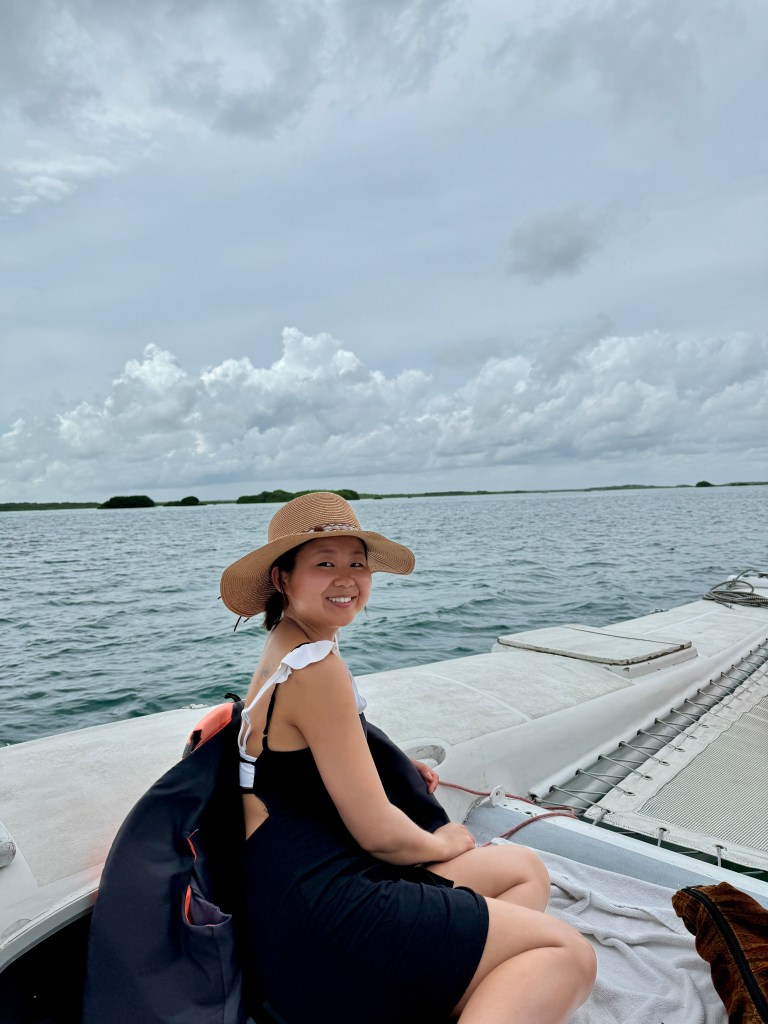
I realized I wasn’t quite as open-minded to “getting out of my comfort zone” when I visited Mexico this summer.
If you’ve never been to Mexico in summer, first of all, good on you.
The conditions are unfavorable for most people — it’s rainy, hot, and infested with mosquitoes.
Particularly in the Yucatán peninsula, which has a tropical climate year-round.
Well, I’m just a girl coming from Chicago, where I’m prepared for below-zero temperatures and snow — not humidity that makes it hard to breathe and mosquitoes on cocaine.
Do I sound overdramatic? Maybe.
If I were more “open-minded” and prepared to “step outside of my comfort zone,” perhaps I would have suffered less.
After all, Mexicans deal with this type of weather every year and don’t complain.
My realization that I needed air-conditioning more than I thought I would made me see that “open-mindedness” and “comfort zones” are also very subjective terms.
Sure, they sound like glamorous concepts in travel, but in reality, how “open-minded” are you willing to be when you are actually suffering without your regular comforts?
Turns out, probably not as much as you think.
9. Travel doesn’t change you; travel can change you
This kind of relates to my previous point about how far you’re willing to stretch yourself when traveling.
Travel tends to be glorified as a magic spell that transforms you:
“Travel makes you more open-minded.”
“Travel teaches you valuable lessons about yourself and the world.”
“Travel is transformative.”
But I can personally attest that these statements are not necessarily true.
You can take a trip and create meaningful memories and connections, but not come out as a different person.
If the kind of travel you do is staying in a resort the whole time, drinking mimosas by the pool, it’s hard to say your travel experience was transformative.
I’m not villainizing this kind of travel if that’s what you enjoy; I’m just arguing that travel experiences are only as awakening as you make them.
Traveling is a beautiful way to enrich your life, but it isn’t inherently transformative — travel can be transformative, which all depends on how you travel.
10. Long-term traveling is not what you think it is
Chances are, if you enjoy traveling, you’ve probably daydreamed of what it would be like to travel for the long term.
Careers that allow you to travel full-time are often seen as dream jobs; but like anything, they’re not all they seem.
Of course, I can’t attest for everyone, and I have never had a full-time career traveling, but I have taken many trips back-to-back without much time in between, which feels like full-time traveling.
Since moving to Madrid, I’ve taken full advantage of the traveling accessibility and affordability in Europe.
I’ve gone on at least one international trip a month with maybe, at most, one or two free weekends in each month.
Basically, I’ve spent most of my free time traveling, which has been incredible; a dream come true; something I feel incredibly grateful and privileged to do.
But I burnt myself out.
Not in a poor-me way, but in a this-is-the-reality way.
Sure, it seems glamorous to vacation somewhere new each weekend, but it becomes physically draining and not as exciting after a while.
I’ve always thought a full-time career traveling is a dream, but I now recognize the beauty of having a home base, a routine, and non-stimulating days.
It wouldn’t be fulfilling to never travel, nor would it be to always travel.
Finding that balance is, like everything else I’ve talked about, subjective and worth discovering for yourself.
It’s a way of living that’s not as exciting as full-time travel content, but it’s the most sustainable for your well-being.
Remember that next time you look at an influencer’s social media feed — it’s not all that it may seem.
Therefore, travel to enrich your life, not to escape it.
Thoughts on this article? I’d love to know in the comment section below!
And if you found value in any of this, make sure to subscribe to this blog for more travel-related content 🙂
Follow me on my socials:
 gottacaseofwanderlust
Leave a comment