Check out these podcast episodes to plan your next trip to Chicago:
Chicago pulsates with a bold flair that defies its surrounding geographical location that is otherwise dominated by corn fields and small towns. While it may be referred to as the “Second City,” Chicago is definitely worth a visit.
Whether you are a lover of museums, food, and/or architecture, this city has something for everyone. I grew up within reach of Chicago, where I currently live. It is the first city I fell in love with, and I am passionate about conveying my local insights to visitors.
Here is the ultimate guide of the 10 best things to do for first-time visitors to Chicago.

- Snap a picture with the Bean
A lentil makes for a peculiar emblem of a city — but at 110 tons of stainless-steel — it is undoubtedly an impressive one.
The sculpture’s official name is “Cloud Gate,” as designated by its creator, Anish Kapoor. Its exterior is inspired by liquid mercury, reflecting Chicago’s skyline and visitors for an epic photo opportunity.
Other notable sites in Millenium Park include the Jay Pritzker Pavilion, which often hosts free events during summer; Lurie Gardens, a peaceful, underrated spot for skyline photos; and the Nichols Bridgeway, a scenic pedestrian bridge that connects to the Art Institute of Chicago.


- Visit a museum
Calling all museum lovers! Chicago has a thriving arts and culture scene, which is reflected in its multitude of museums. Here are five that you might want to check out:
- The Art Institute of Chicago: Founded in 1879, the Art Institute of Chicago is one of the oldest and largest art museums in the country. It houses over 300,000 art pieces — ranging from impressionist paintings to modern cultural pieces — some as old as 5,000 years.
- The Field Museum of Natural History: Egyptian mummies, man-eating lions, and Sue, one of the largest discovered T. rex skeletons — oh-my! History enthusiasts have all of these and much more to explore in the 4.5+ million years housed in the Field Museum.
- Museum of Science and Industry: The Museum of Science and Industry is the largest science museum in the Western hemisphere. It features unique exhibits that showcase a range of subjects from a real submarine to a fairy castle; interactive experiences; and various movie screenings in their domed wraparound movie theater that appeal to all-ages.
- Adler Planetarium: The first planetarium in the United States. How cool!? It was founded in 1930 and is now the premier place to get lost in other worlds. In addition to educational exhibits, visitors also have the opportunity to watch a “Sky Show”, located in Adler’s dome theater. Adler’s location also offers great views of the city at night.
- Chicago History Museum: The Chicago History Museum may not be as popular as the aforementioned museums, but it is no less significant. This museum illuminates Chicago’s complex history through the years. They also showcase monthly featured exhibitions that share the histories, stories, and culture of minorities in Chicago.
- Walk on air at Skydeck Chicago
If you have ever wanted to know what it is like to levitate, this is your opportunity to get a taste — 1353 feet above ground.
Take the elevator up 103 floors, choose one of the four glass boxes to step into, and enjoy the best aerial views of Chicago.
The observation deck is located in the Willis Tower, previously the Sears Tower, which is the tallest building in Chicago at 110 stories.
- Enjoy a Chicago River Cruise
One of the best ways to enjoy the river is taking a boat tour, such as the river and architecture tour, the most popular tour since Chicago is an internationally recognized hub for architectural design.
Pedestrians can also take advantage of the free Chicago Riverwalk: a scenic 1.25 mile walkway along the river that leads to Lake Michigan.

- Venture to Navy Pier
Navy Pier is a fun outdoor attraction with activities for all ages. Numerous carnival rides, shops and restaurants line the length of the 3,300 foot pier.
Besides strolling along the pier, the main attraction is the 196 foot Centennial Ferris Wheel, with enclosed, climate-controlled gondolas for year-round panoramic views. The ferris wheel is another of Chicago’s emblems — as the first world’s ferris wheel was invented for the city’s Worlds Fair in 1893.
Navy Pier also hosts weekly fireworks displays during the summer.
- Admire Buckingham Fountain
Water erupts from the fountain during the months of May through October, depending on the weather. Every hour, a 20 minute light and music show is displayed.

- Explore a different neighborhood enclave
Chicago’s diversity can be explored throughout the city’s 77 neighborhoods. Here is a short guide to five of my favorites:

- Chinatown: Chicago’s Chinatown is located just three miles South of downtown – home to bright red architecture and the aroma of steamed dumplings. Fill up on your favorite Chinese foods, then be sure to explore the Chinese American Museum of Chicago and stroll through Ping Tom Memorial Park.
- Pilsen: The name “Pilsen” comes from a town in the Czech Republic – the name given to this Chicago neighborhood previously dominated by Czech immigrants and other Eastern Europeans. Visitors to Pilsen can delve into Mexican American culture at the National Museum of Mexican Art, tour the vibrant street murals along 16th Street, and devour some of the best tacos in the city.
- Asia on Argyle: Also known as “Little Vietnam,” this neighborhood in Uptown Chicago is one of the most culturally diverse. Today, Uptown has the largest Vietnamese and Ethiopian population in the city. Argyle Street reflects this in its concentration of Southeast Asian restaurants, such as Vietnamese and Thai, as well as East African eateries.
- Little India: Devon Avenue in the West Ridge neighborhood of Chicago, known as “Little India,” is where the first Patel Brothers opened in 1974 — the largest Indian grocery store chain in the United States.
- Bronzeville: Located on Chicago’s South Side, is a center of Black American culture that developed from the United States’ Great Migration in the early 1900s. The community is also home to many influential Black Americans — such as Jazz musician Louis Armstrong, and journalist and social activist Ida B. Wells.
- Check out the theater and music scene
For theater, visitors can find a number of different shows in Chicago’s downtown Theatre District, at iconic sites such as the Goodman Theatre, Cadillac Palace Theatre, and the Chicago Theatre.
For music, Chicago is particularly known for its blues, after the arrival of many blues musicians from the Great Migration. One of the city’s largest outdoor music festivals is the Chicago Blues Festival, a free annual event in June, where some of the most famous blues artists have played.
Jazz is another gift from the Great Migration that is ingrained into Chicago’s culture. The Green Mill Cocktail Lounge, one of the country’s oldest continuously running jazz clubs in the country, is a time machine that transports visitors onto a ‘30s swing dance floor.
- Go to the beach
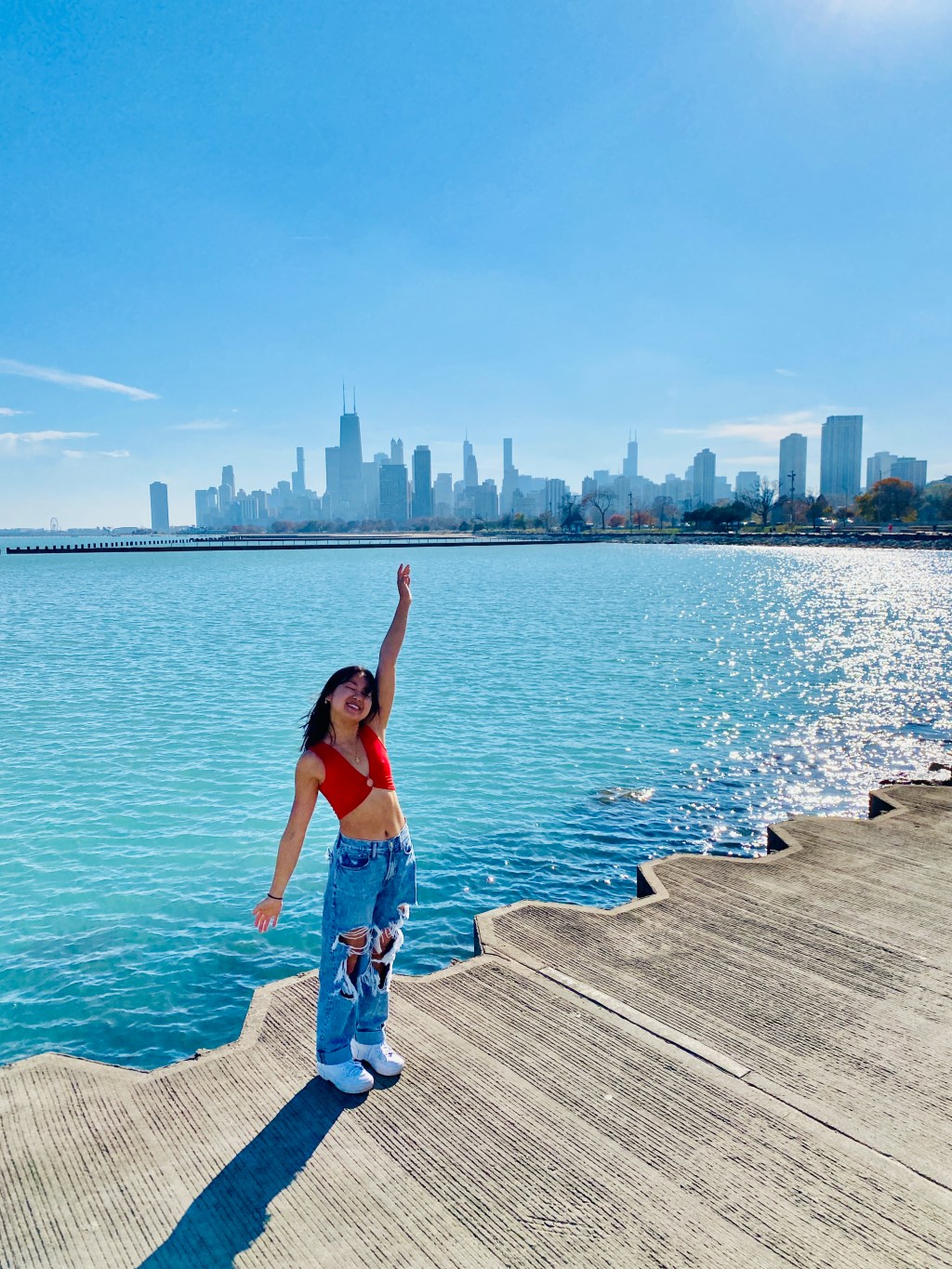
Chicago may be far from the nearest ocean, but do not underestimate its proximity to the largest of the Great Lakes located entirely in the United States: Lake Michigan.
The lake is Chicago’s main water source as well as a delightful source of recreation. There are dozens of beaches across the city for swimming during the summer, with North Avenue Beach being one of the most popular.
Chicagoans also love to utilize the Chicago Lakefront Trail.
- Try deep-dish pizza
When it comes to food, one of Chicago’s most iconic dishes is hands-down deep-dish pizza.
The original deep-dish pizza pie started at Pizzeria Uno in 1943; however, the best deep-dish spots are arguably among Pequod’s, Lou Malnatis, or Giordanos (though this is a passionately debated topic among Chicagoans).
Pro-tip: solo diners beware. Bring a friend to get deep-dish, or just try a slice at the Art of Pizza.
Final Thoughts
Chicago definitely deserves more than a layover at the O’Hare airport; it is truly a city that offers something for everyone.
I hope this guide offers you greater insight when planning your next trip here, and if it does, please share it so others can explore Chicago like an expert tourist!
FAQ’s:
- When is the best time to visit?
The fall (September through early November) and spring (May through June) are generally the best seasons to visit Chicago if sunny, temperate weather is preferred.
Summer is also a great time to visit because this is when Chicago truly comes alive — which is evident in the myriad of festivals, parades, and/or special events happening each week.
Winter is not an ideal time to visit, due to the city’s notorious cold weather; however, December offers fun holiday activities, such as the outdoor Christkindlmarket, and various light shows.
- Is it safe for a solo-female traveler?
While “safe” is subjective and dependent on time and place — in my experience as a solo female in Chicago, my answer is yes.
There are definitely some neighborhoods that are “safer” than others, and some that are best to be avoided, but this is the case for all major cities.
These general safety tips should be applied anywhere as a solo-female traveler:
Pay attention to who is around you
Try to walk near other people on the sidewalks of main streets
Look like you know where you are going
Keep your belongings with you at all times
Remember that you are not obligated to respond to a stranger that approaches you on public transit or makes a comment as you walk by
- How expensive is it to visit Chicago?
Chicago is not a budget-friendly destination; however, there are some ways to save money.
- Ride public transit (aka the CTA)
The United States may be a car-centric country, but fortunately, in Chicago, a car is not necessary! Yay!
Public transit may not be the cleanest or most timely, but it is by far the most cost-effective and it does its job.
Chicago’s elevated rail system, nicknamed the “CTA” or the “L”, will get you anywhere within the city, including to and from the airport.
It is $5 for a 24-hour pass that allows for unlimited rides on the CTA or the buses.
- Stay in a hostel
Hostels in Chicago typically cost about $50 per night.
The best hostel is the HI Chicago Hostel. They offer free tours and events, free breakfast, and a welcoming kitchen and common room area for all guests.
Plus, it is centrally located in the downtown Loop area, just a short walk to Millenium Park.
- How did Chicago get its name?
Like many other names in popular culture, Chicago’s name comes from Native American origins. The area was inhabited by the native Algonquian peoples before European settlers took over.
Chicago comes from the “Frenchified” version of the Algonquin word for onions or leeks — probably from the particularly pungent-smelling onions and leeks that grew in the water bodies around Chicago.
- Why is it called the “Windy City?”
Short story: It has nothing to do with the weather and everything to do with Chicago’s politics.
Long story: The real origin is not definitely known, but the most popular rumor is that the politicians of Chicago were described as being “full of hot air,” and thus, “Windy.”

 gottacaseofwanderlust
Leave a comment